
How to Create Distinctive Brand Assets That Stand Out in 2026
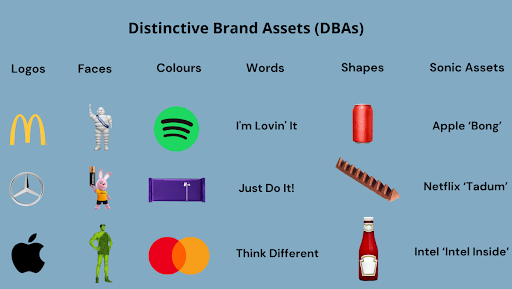
In 2026, distinctive brand assets aren’t just logos or taglines—they’re the cues that trigger instant recall, like McDonald’s golden arches or Nike’s swoosh. This instant recognition isn’t luck. It’s the power of distinctive brand assets that makes a brand unforgettable.
But here’s the catch: today’s market is louder than ever. If your assets aren’t consistent, easily accessible, and strategically managed, they’ll fade into the background. That’s where digital Brand Asset Management tools like Ethos step in, giving businesses the control to design, distribute, and protect assets that actually stand out
What Are Distinctive Brand Assets?
Put simply: distinctive brand assets are the recognizable cues that make your brand you.
These assets are the shortcuts that keep your brand top of mind. They anchor memory structures, so even if people don’t remember your latest ad, they remember you.
They can be:
- Visual: Logos, colors, typography, design language, mascots
- Verbal: Taglines, slogans, brand voice, mission, and values
- Sonic: Jingles, audio logos, soundscapes, voiceovers
1. Visual Assets
These are the “see it and know it’s us” cues. Visual assets make your brand instantly recognizable — even in a crowded shelf or busy feed.
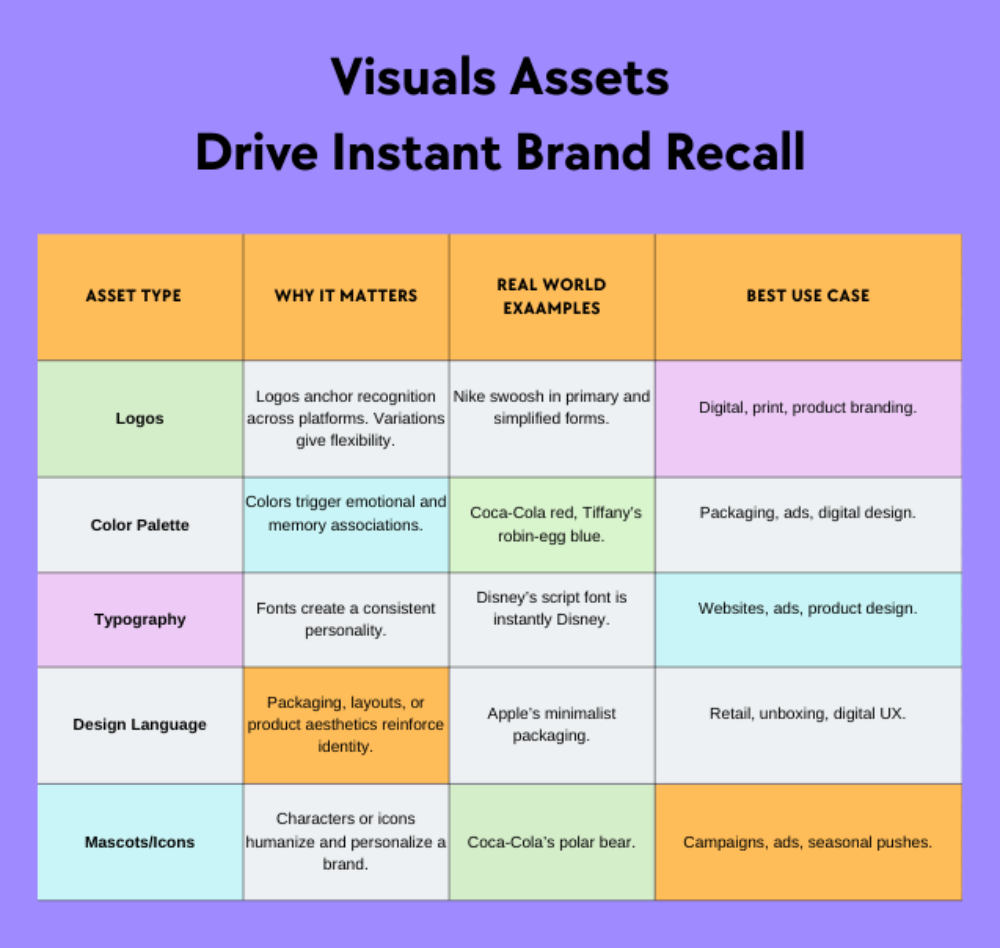
A strong visual identity can increase brand recognition by up to 80%. Brands that consistently use visual assets across channels see higher engagement, better recall, and more purchase influence.
2. Verbal Assets
Words stick. Whether it’s a slogan or a brand’s tone of voice, verbal assets give your brand a personality that people can quote, repeat, and remember.
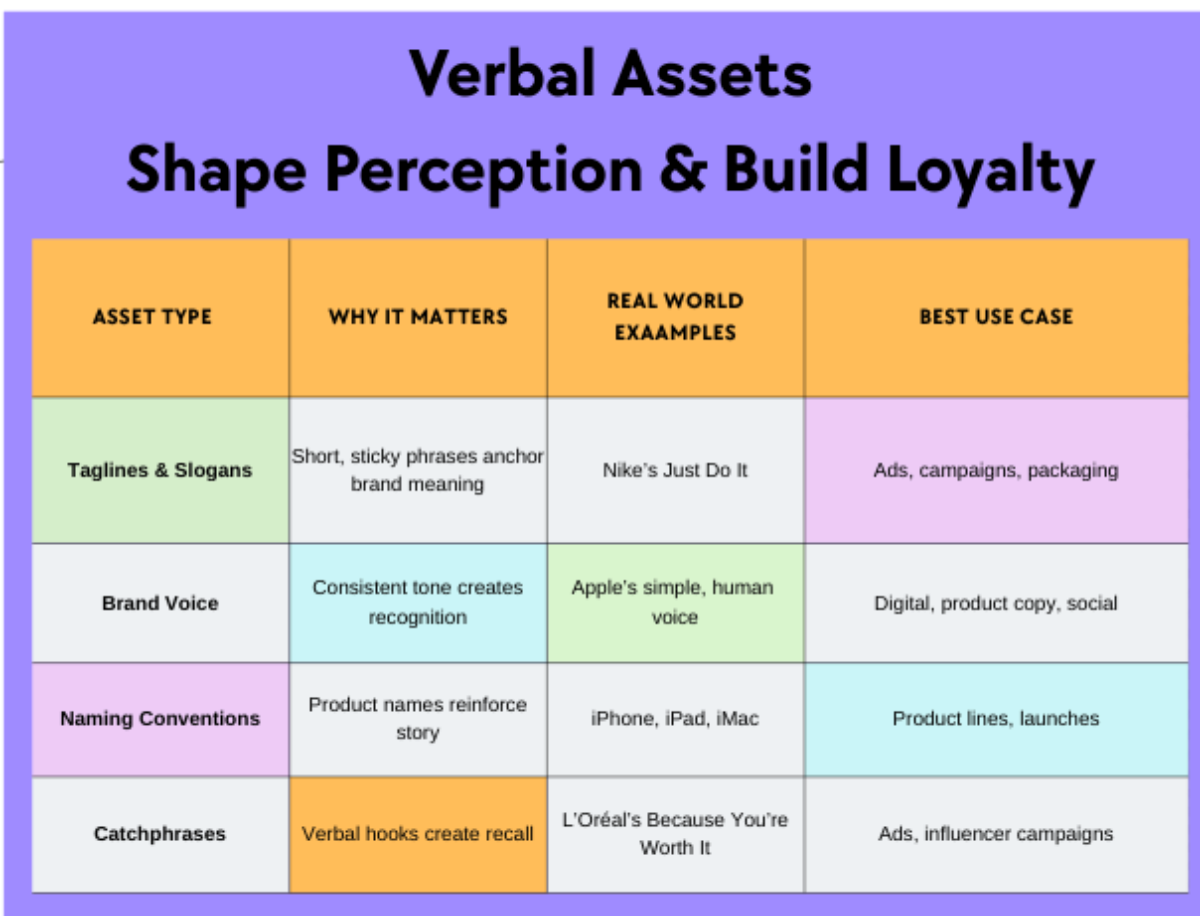
Clear, consistent verbal assets increase message retention and build emotional connections with your audience.
3. Sonic Assets
Sound travels faster to memory than sight. Sonic assets turn a few notes or tones into instant recognition.
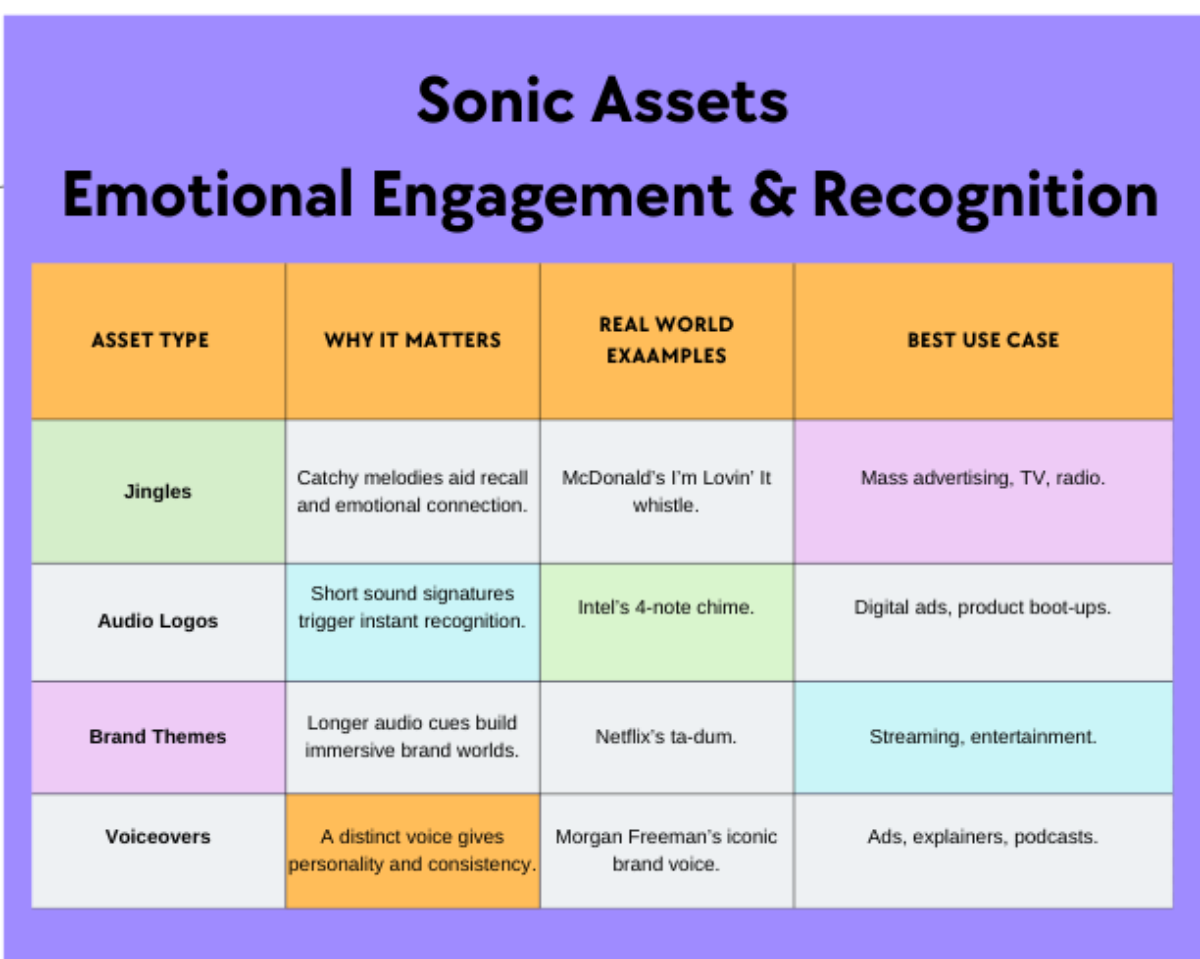
Research shows that brands using sonic assets can improve recall by up to 46%, making them a critical tool in distinctive assets marketing.
How Do You Build Distinctive Brand Assets in 2026?
You build distinctive brand assets by combining strategy, creativity, and discipline.
Think of Blockbuster. At its peak, it was everywhere, but it lacked distinctive, future-ready assets. Meanwhile, Netflix built recognizable signals—its bold red “N,” its signature “ta-dum” sound, and a clear purpose around accessible, on-demand entertainment. One brand blurred into history; the other became part of culture.
That’s the cost of ignoring distinctive brand asset marketing: without clear and memorable cues, even big brands can disappear.
So, what does it take to build assets that actually stick in 2026? Let’s break it down.
1. Lead with Authenticity and Purpose
Consumers today want more than a logo—they want a brand that means something. A polished design without substance falls flat.
- Define your “why.” A clear purpose and mission give your brand direction. Patagonia thrives because its values of sustainability show up everywhere—from product design to activist campaigns.
- Show, don’t tell. If you’re eco-conscious, don’t just say it—prove it through recycled packaging, transparent sourcing, and visuals that reflect nature.
- Keep it human. Overly polished ads feel fake. In 2026, audiences connect more with genuine, spontaneous content—even if it’s imperfect.
Authenticity is no longer optional. It’s the filter through which every asset is judged.
2. Design with Purpose: Dynamic and Tactile Elements
Your visual identity is often the first impression, and in 2026, static logos and sterile designs aren’t enough.
- Dynamic logos. Brands are moving beyond fixed marks. Spotify experiments with adaptive logo variations that shift in color and style without losing recognition.
- Bold typography. Fonts carry personality. Disney’s whimsical typeface or The New York Times’ gothic serif instantly communicates identity.
- Tactile design. Digital doesn’t mean flat. Adding textures, gradients, or 3D elements creates a more tangible brand feel.
- Eco-conscious visuals. From muted earth tones to recycled textures, design is increasingly expected to reflect environmental values.
These touches make brands feel alive, relevant, and more memorable.
3. Build Multi-Sensory Brand Experiences
A strong brand isn’t just seen—it’s heard, felt, and experienced.
- Sonic branding. Netflix’s “ta-dum,” Intel’s chime, or McDonald’s “I’m Lovin’ It” jingle prove how powerful audio can be. Research shows sound alone can improve brand recall by nearly 50%.
- Immersive tech. AR and VR are no longer futuristic—they’re practical tools. IKEA lets shoppers place virtual furniture in their homes. Beauty brands offer AR try-ons that make purchase decisions easier.
- Dynamic, personalized content. AI tools can generate tailored videos, interactive web experiences, and even personalized product suggestions that adapt to each user.
The more senses you activate, the stronger the memory you create.
4. Foster Community Through Storytelling
People don’t just want to buy from brands; they want to belong to them.
- Community-first approach. Brands like Lego thrive by encouraging user-generated content and community-building platforms where fans co-create.
- Long-form storytelling. Podcasts, video series, and in-depth blogs create deeper emotional connections than bite-sized ads ever could.
- Micro-influencers. Instead of one celebrity, brands are leaning into many smaller voices with authentic, niche reach.
- Employee voices. Your team is part of your brand. Sharing their stories humanizes your business and strengthens trust.
Storytelling is what turns logos and colors into culture and belonging.
5. Adapt with AI While Keeping the Human Touch
AI is shaping branding faster than ever, but it works best when paired with human creativity.
- Balance AI and authenticity. Use AI to streamline repetitive tasks—like asset generation or campaign testing—but keep humans steering strategy and emotion.
- AI-enhanced efficiency. Tools can auto-tag assets, predict what visuals perform best, and personalize user journeys at scale.
- Chatbots with personality. Instead of generic AI responses, brands are creating bots that speak in their tone of voice, strengthening consistency.
AI is a powerful assistant, but it can’t replace genuine human connection—and that’s where brands win.
How Does Ethos Help Brands Stand Out?
Ethos helps brands stand out by giving them a single platform to create, control, and scale their distinctive brand assets.
Here’s why it matters:
- Consistency at scale – Every team member works with the same approved assets.
- Faster collaboration – No wasted time hunting files or guessing which version is right.
- Protection – Brand integrity stays intact because Ethos enforces guidelines.
- Adaptability – Assets evolve with your brand while staying rooted in recognition.
In 2026, distinctiveness isn’t just about creativity — it’s about control.
With Ethos, executing distinctive assets marketing becomes seamless and measurable. No more broken links, outdated logos, or inconsistent colors—it’s brand control on autopilot.
Final Takeaway: Distinctive Brand Assets + Smart Management = Market Power
In 2026, creating distinctive brand assets is your ticket to instant recognition. But consistency is what keeps that recognition strong over time.
The best brands don’t just design assets—they manage them like business-critical resources. That means protecting them, scaling them, and giving every team access to the right version at the right time.
If you’re ready to stop hunting for logos in random folders and start building brand recognition that actually lasts, Ethos is your answer.
FAQs
What are examples of distinctive brand assets?
Logos, colors, fonts, sounds, taglines, packaging design—anything that triggers recognition without needing your brand’s name.
Why is consistency important in brand assets?
Inconsistency weakens recognition. Strong assets only work if they look and feel the same everywhere.
Why is consistency important in brand assets?
Inconsistency weakens recognition. Strong assets only work if they look and feel the same everywhere.
What’s the difference between brand assets and distinctive brand assets?All brands have assets (logos, colors, fonts). Distinctive assets stand out so clearly that they build memory structures in your audience’s mind.
How Ethos' Brand AI Auto Writer Helps Teams Create On-Brand Content Automatically

11 Brand Guidelines Examples That Every Growing Brand Should Study
How to Assess What Your Brand Is Missing: Strategies for Managers
.svg)


